 comparison
What Do Outsourced Glazing Shop Drawings Really Cost?
Last Updated: November 8, 2026
Quick Summary
Outsourced glazing shop drawing pricing follows four models: per-sheet, hourly CAD drafting, fixed-price packages, and full-time engagement. Each shifts risk differently, so match the model to what is most likely to change, whether sheet count, design, schedule or pipeline. The revision policy usually decides your final invoice more than the headline rate.
- Per-sheet pricing is easiest to budget but becomes the most disputed at invoice.
- Hourly rates reward time, not output, so cap hours and request progress reporting.
- Fixed-price packages carry risk in exclusions like extra sheets and design changes.
- Sort sheets into Class A, B and C complexity before requesting a quote.
- A cheap per-sheet rate with unlimited billable revisions can cost more overall.
Table of Contents
- Why Glazing Shop Drawing Pricing Models Differ So Much
- The Four Outsourced Glazing Shop Drawing Pricing Models Compared
- Shop Drawing Cost Factors That Move the Number Most
- How to Calculate Per-Sheet Drafting Pricing Before You Request a Quote
- What Hourly CAD Drafting Rates Hide About Real Project Cost
- Shop Drawing Revision Policy: The Clause That Decides Your Final Invoice
- Vetting a Drafting Provider and the Contract Safeguards to Insist On
- Submit Your Drawing Package for a Scoped Quote
- Frequently Asked Questions
Why Glazing Shop Drawing Pricing Models Differ So Much
Outsourced glazing shop drawing pricing models vary because providers sell different things: some sell sheets, some sell hours, and some sell a person. A glazing shop drawing is a fabrication-level document that translates design intent into buildable details for glass panels, aluminum framing, hardware, anchors and connections. How a provider counts that work decides what you pay.
When buyers compare outsourced glazing documentation, the first questions worth asking are how many sheets are needed, how many revisions are included, and who approves them. Most pricing arguments trace back to those three answers.
The four models below are not interchangeable. Pick the wrong one and you either overpay for capacity you never use or underpay until the revision cycles arrive.
The Four Outsourced Glazing Shop Drawing Pricing Models Compared
The four common engagement models are per-sheet pricing, hourly CAD drafting rates, fixed-price packages, and full-time engagement. Each shifts risk between you and the drafting provider in a different direction, and each becomes economical at a different point in a project's life.
| Model | You Pay For | Best For | Main Risk | What It Usually Includes | What It Usually Excludes |
|---|---|---|---|---|---|
| Per-sheet | Each drawing issued | Well-defined, repeatable systems | Sheet counting disputes | Drawing production, title blocks, standard details | Revisions beyond an agreed cycle, coordination meetings, engineering sign-off |
| Hourly | Drafting time | Evolving or unclear scope | Open-ended hours | Drafting hours, markups, ad hoc changes | Fixed deliverables, schedule certainty, rework caused by provider error |
| Fixed-price package | A defined deliverable set | Tender-stage budgeting | Scope creep exclusions | A named drawing set, stated revision cycles | Additional sheets, design changes, rush turnaround |
| Full-time engagement | A dedicated resource | Sustained project pipelines | Idle capacity cost | A drafter's time, your standards, ongoing support | Peak-load overflow, specialist engineering input |
Per-Sheet Drafting Pricing: Predictable but Fragile
Per-sheet pricing charges a set rate for each drawing produced. It is the easiest model to budget because you can multiply sheets by rate before work starts, and it suits projects where the system repeats.
The fragility sits in the definition of a sheet. Ask whether a title block revision counts as a new sheet, how sections and elevations are tallied, and whether a schedule is billable separately. Get that in writing.
Per-sheet pricing also hides coordination cost. If a sheet needs checking against structural and services drawings, that checking time has to be recovered somewhere, either in a higher per-sheet rate or in a separate coordination line. Ask which.
Hourly CAD Drafting Rates: Flexible but Open-Ended
Hourly rates suit projects where the scope genuinely moves: field measurements that shift, design intent that gets revised mid-documentation, or coordination with other consultants still in flux. You pay for the work actually done, which is fair when the work is genuinely unpredictable.
Flexibility is the selling point. The catch is that hourly billing rewards time, not output, so a provider with slow internal QA costs you more without producing more. Cap the hours or request progress reporting.
Hourly also makes revision cost invisible until it arrives. Two providers can quote the same hourly figure and deliver wildly different totals because one absorbs minor markups inside the drafting hour and the other bills every markup as a fresh instruction.
Fixed-Price Packages and Full-Time Engagement
Fixed-price packages bundle a defined drawing set, usually per system or per level, at one agreed figure.
Full-time engagement places a dedicated drafter with your team for a set period. It works when you have continuous pipeline and want the drafter to learn your standards once rather than relearning them per job.
A useful way to choose between the four is to ask what is most likely to change: the sheet count, the design, the schedule, or the pipeline. Match the model to the variable most likely to move, and put the other three into the contract as stated assumptions.
Shop Drawing Cost Factors That Move the Number Most
The biggest cost drivers in glazing shop drawing pricing are project complexity, drawing volume, revision cycles and documentation requirements.
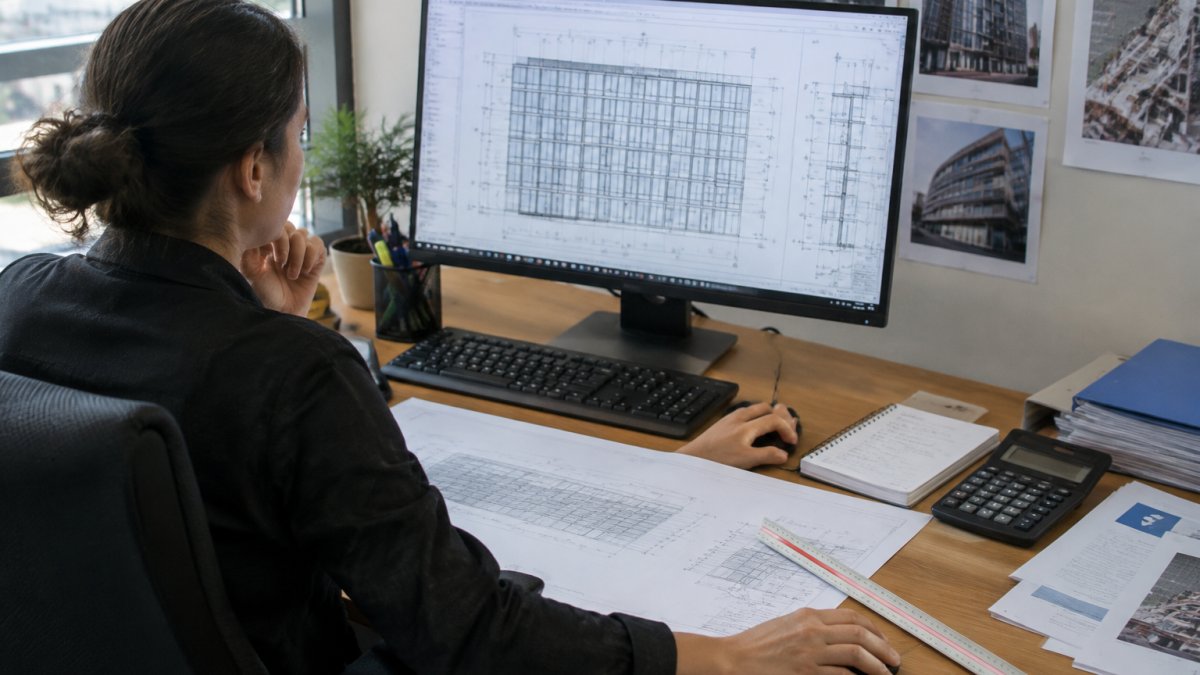
Complexity shows up in geometry and interfaces. Curved work, faceted corners, and unusual connections to structure take longer per sheet than a repeated rectangular grid. Coordination load matters too: the more consultants touching the facade, the more checking each sheet needs.
Documentation requirements add cost quietly. The National Construction Code sets the performance framework your drawings must support, and Standards Australia's AS 1288 glass in buildings standard governs glass thickness and selection documentation.
How to Calculate Per-Sheet Drafting Pricing Before You Request a Quote
To estimate per-sheet pricing, count the drawings you actually need, classify them by complexity, and apply the provider's rate to each class. Most quotes fail because the buyer counted headings, not sheets, a drawing package with twelve headings can easily contain forty billable sheets once plans, elevations, sections, details and schedules are separated.
A practical framework is to sort every sheet into three complexity classes before you approach a provider:
- Class A, typical and repeated. Standard rectangular grids, typical details, schedules built from a repeated system. These carry the lowest per-sheet rate because the drafting effort is largely repeatable.
- Class B, coordinated. Sheets that interface with structure, services or other consultants, or that carry non-standard junctions. These need checking time beyond drafting time and are usually quoted at a higher rate.
- Class C, bespoke geometry. Curved work, faceted corners, unusual connections and one-off details. These take the longest per sheet and should never be priced at the typical rate.
Once sheets are classified, the estimate is a simple multiplication: count per class, multiply by the provider's class rate, then add the revision allowance and coordination allowance as separate lines.
Use this checklist before you send a drawing package out:
- Count every plan, elevation, section and detail sheet separately
- List schedules and typical details as their own line items
- Flag curved, faceted or non-standard geometry for a higher rate class
- Note which sheets need coordination with structural and services drawings
- Confirm whether revisions are billed per sheet or per cycle
- Ask how field measurement updates are charged
- State the assumed revision cycles in the quote request, not after
If you want to see how a typical sheet is structured before you estimate, review facade shop drawing examples and what each sheet shows.
What Hourly CAD Drafting Rates Hide About Real Project Cost
Hourly CAD drafting rates hide the cost of rework. An hourly rate tells you what an hour costs, not how many hours a clean, coordinated drawing package takes.
Two providers can quote the same hourly figure and deliver wildly different totals. The difference is internal process: how they check dimensions against design intent, how they manage revisions, and how quickly they turn around a resubmittal.
Ask for a realistic hour estimate per sheet class. A provider confident in their process will give you one.
Shop Drawing Revision Policy: The Clause That Decides Your Final Invoice
The revision policy decides your final invoice more than the headline rate does. A cheap per-sheet rate with unlimited billable revisions can cost more than a higher rate with two included cycles.
Read the clause for three things: how many revision cycles are included, what counts as a revision versus a new instruction, and who bears the cost when the change originates from design intent rather than drafting error. Rework caused by a provider's own error should never land on your invoice.
Turnaround pressure makes this worse. If a revision cycle adds days you did not plan for, the schedule cost can exceed the drafting cost. Understanding turnaround times for glazing shop drawings helps you see where revision cycles eat into programme.
Vetting a Drafting Provider and the Contract Safeguards to Insist On
Vetting a drafting provider comes down to evidence: system knowledge, documented QA, and contract terms that put rework risk where it belongs. Claims about cost savings mean little without a basis you can test.
Ask every provider these questions:
- Which framing systems do you document regularly, and can you show examples?
- What is your internal checking process before a sheet is issued?
- How do you handle coordination with other consultants?
- What is your liability position if a drawing causes a site issue?
- Can you provide references for projects of similar complexity?
If you are comparing specialist providers on fees and scope, this comparison of facade design consultants gives you a starting point for what to ask and what to expect.
Watch out: the most common mistake is choosing on rate alone and discovering at construction stage that the drawings did not resolve compliance or constructability issues. That gap turns into RFIs and site delays, and the drafting saving disappears fast.
Submit Your Drawing Package for a Scoped Quote
Pricing models only get you to a number. The real question is whether the provider understands your glazing systems well enough that the number holds.
BluePrint Facade produces facade and glazing shop drawings for window wall and curved window systems, with technical documentation for product brands including Alspec, Capral and Darley.
Send through your drawing package and project scope to request a quote. Current prices and quotes are available from the BluePrint Facade website.
If your next project needs glazing documentation that survives the approval process without a revision-cycle surprise, that starts with a clear scope. BluePrint Facade can review your drawing package and return a quote that spells out inclusions, exclusions and revision terms.
Frequently Asked Questions
Is per-sheet or hourly pricing better for glazing shop drawings?
It depends on how well defined your scope is. Per-sheet drafting pricing suits projects where the drawing package is settled: you know the sheet count, the systems and the level of detail, so the rate is fixed and you can budget with confidence. Hourly CAD drafting rates suit early-stage or evolving work where scope will shift, but they leave you exposed if revisions multiply. Ask each provider to quote both ways on the same scope, then compare the totals rather than the headline rate.
What should a fixed-fee glazing drawing quote include?
A fixed-fee quote should state the sheet list, drawing scale, systems covered (curtain wall, window wall, storefront), the level of detail for sections and connections, and how many revision rounds are included. It should also name what is excluded, such as structural design, thermal modelling or site measurement, and set out how additional sheets or design changes are charged. If a quote is a single number with no inclusions list, treat it as an estimate and ask for the schedule behind it.
Are revisions included in outsourced shop drawing pricing?
Only if the shop drawing revision policy says so. Most providers include one or two review rounds within the fee and charge for anything beyond that, so the number of rounds matters as much as the rate. Ask whether revisions caused by a change in design intent are billed at the same rate as drawing errors, and whether a resubmission after consultant review counts as a new round. Get the answer in writing before work starts.
How can I reduce the cost of glazing shop drawings without compromising quality?
Send a complete brief: architectural drawings, system schedules, product selections and any field measurements already taken. Incomplete information is the main cause of rework, and rework is what inflates hourly and per-sheet costs. Standardise title blocks and layer conventions across projects so drawings need less setup, and batch similar window wall packages into one engagement rather than several small jobs. Cheaper is not the same as lower cost if the drawings trigger RFIs on site.